Sustainability

Sustainable Clean Beauty: Beyond the Ingredients List

Clean beauty conversations fixate on INCI lists and ingredient safety — but the environmental impact of a cosmetic product extends far beyond what's inside the bottle. Sourcing, manufacturing, packaging, transport, and end-of-life disposal all contribute to a product's true sustainability footprint.

As a cosmetic chemist, I've spent years evaluating not just what goes into formulations but how the raw materials are sourced, processed, and packaged. This guide covers the full lifecycle of a clean beauty product and how to evaluate brands honestly against sustainability claims.

Chloé Fournier, M.S. Cosmetic Science

Updated February 2026

Aerial view of organic botanical farm with rows of cultivated medicinal herbs and wildflower margins for biodiversity

The Full Lifecycle of a Clean Beauty Product

Sustainability cannot be evaluated at a single touchpoint. Every stage of a product's life contributes to its environmental impact — and most brands only discuss the stages that look good.

01. Raw Material Sourcing

Biodiversity, fair trade, wildcrafting vs farming, water use, pesticide load, habitat impact

02. Manufacturing

Energy sources, water consumption, waste management, solvent use in extraction, factory certifications

03. Packaging

Material recyclability, recycled content, refillability, material mix complexity, secondary packaging volume

04. Distribution

Transport distance, cold-chain requirements, shipping emissions, local vs global manufacturing

05. End of Life

Packaging recyclability in practice, take-back schemes, biodegradability of formula, waterway impact

Stage 01

Sustainable Ingredient Sourcing

Raw material sourcing is where beauty's most significant — and least discussed — environmental impacts occur. The majority of clean beauty's "hero" botanicals come from tropical and subtropical regions with significant biodiversity: rosehip from Chile, moringa from West Africa, argan from Morocco, jasmine from Egypt, sandalwood from India and Australia.

Scale is the critical factor. A small artisanal brand sourcing 50kg of rose oil annually from a cooperative in Grasse has a fundamentally different impact than a multinational extracting thousands of tonnes of palm-derived ingredients through intermediaries with no supply chain visibility.

Fair Trade Botanicals

Fair trade certification (Fairtrade International, World Fair Trade Organization) ensures farmers and workers in ingredient-source communities receive fair compensation and have safe working conditions. For most global brands, supply chains pass through multiple intermediaries — traceability back to origin is rare and valuable when present. COSMOS certification requires supplier audits that include social criteria, not just organic growing standards.

Biodiversity Risk

Demand for trendy botanical ingredients can create real biodiversity pressure. Oud (agarwood), wild rosehip, and certain orchid species have seen population stress from beauty industry demand. Responsible brands either farm their own botanical sources, use certified wildcrafted suppliers with harvest quotas, or substitute with synthetic equivalents where the environmental argument supports it. Synthetic biodiversity-equivalent actives are not inherently less sustainable than wildcrafted ones.

Biodynamic Agriculture

Biodynamic farming (Demeter certification) goes beyond organic standards, treating the farm as a self-contained ecosystem. It prohibits synthetic inputs, mandates soil health practices, and requires that 10% of farmland be dedicated to biodiversity. Weleda's biodynamic partner farms are one of the few examples where ingredient sourcing is a genuine environmental asset rather than a marketing claim.

Sourcing Red Flags

  • "Sustainably sourced" without naming certifier or audit body
  • Palm-derived ingredients without RSPO certification (Roundtable on Sustainable Palm Oil)
  • Exotic endangered-species-adjacent ingredients (certain agarwood, certain orchid derivatives) without CITES compliance documentation
  • No supplier list or country of origin disclosure
  • More than 4 supply chain intermediaries with no traceability

Sourcing Green Flags

  • COSMOS or Demeter certification with named certifier
  • Published supplier list with country of origin per ingredient
  • Direct farmer partnerships with documented fair trade terms
  • Own-farm or cooperative-sourced botanicals
  • Published annual impact report with measurable supply chain metrics
Stage 03

The Packaging Problem — and the Greenwashing

Packaging is where clean beauty's sustainability rhetoric most frequently outpaces reality. Glass, plastic, aluminium, refillable, compostable — each comes with trade-offs that brands rarely disclose fully.

GLASS

Glass Packaging

Advantages

Infinitely recyclable without quality degradation. No chemical leaching into formulas. Premium perception drives consumer satisfaction. Heavier weight means consumer perceives higher quality.

The Trade-offs

Much higher transport carbon footprint due to weight — typically 3–5x heavier than equivalent plastic. Energy-intensive to produce. Fragile in transit, creating waste. Glass recycling rates in practice are often lower than assumed due to contamination and regional infrastructure gaps.

Glass is not automatically more sustainable than plastic when lifecycle transport emissions are included in the calculation.
PCR

Recycled Plastic (PCR)

Advantages

Post-consumer recycled (PCR) plastic extends the life of existing plastic without requiring virgin petroleum extraction. Much lighter than glass — significantly lower transport emissions. High PCR content (50–100%) is now achievable for most cosmetic primary packaging.

The Trade-offs

Not infinitely recyclable — plastic quality degrades over cycles. Multi-material packaging (pump mechanisms, mixed polymers) is often unrecyclable. PCR plastic has limited supply globally, creating a market constraint. Chemical additives in some recycled plastics warrant scrutiny for direct food/cosmetic contact.

High-PCR mono-material plastic is often more sustainable than virgin glass on a lifecycle basis, particularly for online shipping.
REFILL

Refillable Systems

Advantages

The most genuinely impactful packaging approach. A refill system that achieves 5+ uses of the primary container reduces packaging waste by 80% vs single-use. Aluminium refill pods (Haeckels, Aesop Refillable range) are durable and highly recyclable.

The Trade-offs

Consumer adoption rate is the limiting factor — estimates suggest fewer than 20% of refill-available consumers actually refill. In-store refill stations require physical retail infrastructure. Hygiene and microbiological safety of refill systems requires careful design and consumer education.

Refillable is the gold standard when consumers actually use the system. A refill pod that sits unused is not sustainable.

Packaging Greenwashing Patterns to Recognise

"Eco-friendly packaging" — meaningless without specifics. What material, what recycled content percentage, what recyclability in which waste streams?
"Biodegradable" — most cosmetic plastics labelled biodegradable require industrial composting conditions unavailable in home compost or landfill.
"Recyclable packaging" — technically recyclable but with pump mechanism, multi-material lid, or metallised label that renders the whole unit unrecyclable in practice.
"Made with recycled materials" — check the percentage. 1% recycled content qualifies legally for this claim. Ask for the PCR percentage specifically.
Innovation

Waterless Formulas: A Genuine Sustainability Advance

The beauty industry uses enormous quantities of water — not just in the formulas themselves (water is typically 60–90% of an emulsion), but in manufacturing cleaning, ingredient processing, and steam sterilisation. Globally, the personal care industry's water footprint runs to billions of litres annually.

Waterless (anhydrous) formulas — solid bars, concentrated powders, oil-based serums and balms — offer several genuine sustainability advantages beyond marketing appeal:

  • 1No preservative required: Without water, there is no microbial growth medium, eliminating the need for preservative systems. This simplifies formulas and reduces one class of often-scrutinised ingredients.
  • 2Higher active concentration: Without water diluting the formula, active ingredient concentration per gram is much higher. A concentrated shampoo bar replaces 2–3 bottles of liquid shampoo on equivalent active delivery.
  • 3Lighter packaging: Solid formats require minimal packaging — often just paper or cardboard — dramatically reducing plastic consumption and transport weight.
  • 4Consumer adds water at point of use: Brands like Ethique and HiBAR have built entire product lines on this principle, estimating carbon savings of 60–80% vs conventional liquid equivalents on a per-wash basis.

The limitation to acknowledge: Some consumers find waterless formulas perform differently on their hair or skin type, or find solid formats less convenient. Sustainability gains are irrelevant if consumers don't use the products — adoption drives the actual environmental impact.

Waterless Beauty Categories

Solid Shampoo BarsEthique, HiBAR, Lush — highest adoption rate
Mature
Solid Conditioner BarsEthique, Noughty, Kitsch
Growing
Facial Cleansing BarsFat and the Moon, Meow Meow Tweet
Growing
Anhydrous Facial SerumsOil-based active delivery systems
Emerging
Powder-to-Foam CleansersActivated by consumer with water
Emerging

Carbon Footprint in Clean Beauty

Few brands publish product-level lifecycle carbon assessments. Most sustainability claims in beauty are scope-limited — they count manufacturing emissions but ignore raw material extraction (often the largest single contribution) and transport.

Where the Emissions Come From

Raw materials
~35%
Manufacturing
~20%
Packaging prod.
~22%
Transport
~15%
Consumer use
~5%
End of life
~3%

Approximate averages based on published lifecycle assessments from L'Oréal, Unilever, and independent academic analyses. Varies significantly by product category and formula type.

What Meaningful Carbon Action Looks Like

Science-Based Targets (SBTi)

Brands committed to the Science Based Targets initiative have independently verified, Paris Agreement-aligned emissions reduction commitments. This is one of the most credible corporate climate commitments available. L'Oréal, Henkel, and a small number of indie brands have SBTi commitments.

Carbon Offsetting — With Caveats

Carbon offsets (forest protection, renewable energy credits) are controversial. High-quality offsets through verified standards (Gold Standard, Verified Carbon Standard) provide some value. But offsetting does not reduce emissions — it compensates for them, which is a meaningfully different (and lower) ambition.

Renewable Energy in Manufacturing

Switching manufacturing facilities to renewable energy is one of the highest-impact operational changes a brand can make. Weleda's manufacturing in Schwäbisch Gmünd uses renewable energy across core production. Pai Skincare's London production is powered by renewable sources. This is verifiable and significant.

Certifications That Cover Sustainability (Not Just Ingredients)

Most ingredient-focused certifications (COSMOS, EWG) do not evaluate broader environmental and social sustainability. These certification bodies address the full picture.

B Corp

Certified by B Lab. Evaluates governance, workers, community, environment, and customers across the whole business. Score must be above 80/200 and businesses must legally commit to stakeholder (not just shareholder) accountability. Recertified every 3 years. Notable examples: Lush, Pai Skincare, Ethique, Weleda (in progress).

Scope: Full Business

Leaping Bunny

The internationally recognised cruelty-free standard. Unlike many self-declared cruelty-free claims, Leaping Bunny requires supplier-level auditing — confirming that ingredient suppliers have also ceased animal testing for cosmetic purposes. Maintained by Cruelty Free International. Annual recommitment required.

Scope: Animal Welfare

1% for the Planet

Members commit 1% of annual revenue (not profit) to environmental non-profit organisations from a verified network. Independently audited annually. Caudalie, Tata Harper, Pai Skincare are members. The revenue basis (not profit) is important — it holds during loss-making years and creates real financial commitment.

Scope: Environmental Giving

Rainforest Alliance

Particularly relevant for brands sourcing tropical ingredients. Evaluates farms and forests against sustainability criteria including biodiversity, ecosystem protection, worker rights, and community relations. The "Rainforest Alliance Certified" seal on an ingredient means the growing operation has been third-party audited against these standards.

Scope: Agricultural Supply Chain

How to Audit a Brand's Sustainability Claims

The EU's 2024 Green Claims Directive is beginning to enforce evidentiary standards on environmental marketing claims — but enforcement is uneven and compliance timelines are long. Until regulatory clarity arrives, here is how I evaluate a brand's sustainability positioning myself.

  1. 1
    Find the Impact Report. Credible brands publish annual sustainability or impact reports with measurable metrics — tonnes of CO2, percentage of recycled packaging, water usage data, supplier audit numbers. If no report exists, their sustainability claims are self-declared marketing.
  2. 2
    Look for named certifiers. "Sustainably sourced" means nothing without a named audit body. COSMOS, Fairtrade, Rainforest Alliance, Demeter — these are verifiable. A green leaf logo created in-house is not.
  3. 3
    Check packaging specifics. What percentage of recycled content? What recyclability in mainstream waste streams? Is the entire pack recyclable (pump, label, container) or just theoretically?
  4. 4
    Identify scope of claims. Is the brand claiming sustainable ingredients, or sustainable operations too? A brand with COSMOS ingredients but coal-powered manufacturing and air-freighted products has a limited sustainability story.
  5. 5
    Look for targets, not just achievements. A brand that commits to being "fully sustainable by 2030" with intermediate, independently monitored targets is more credible than one claiming current perfection. Acknowledging current limitations is a transparency signal.
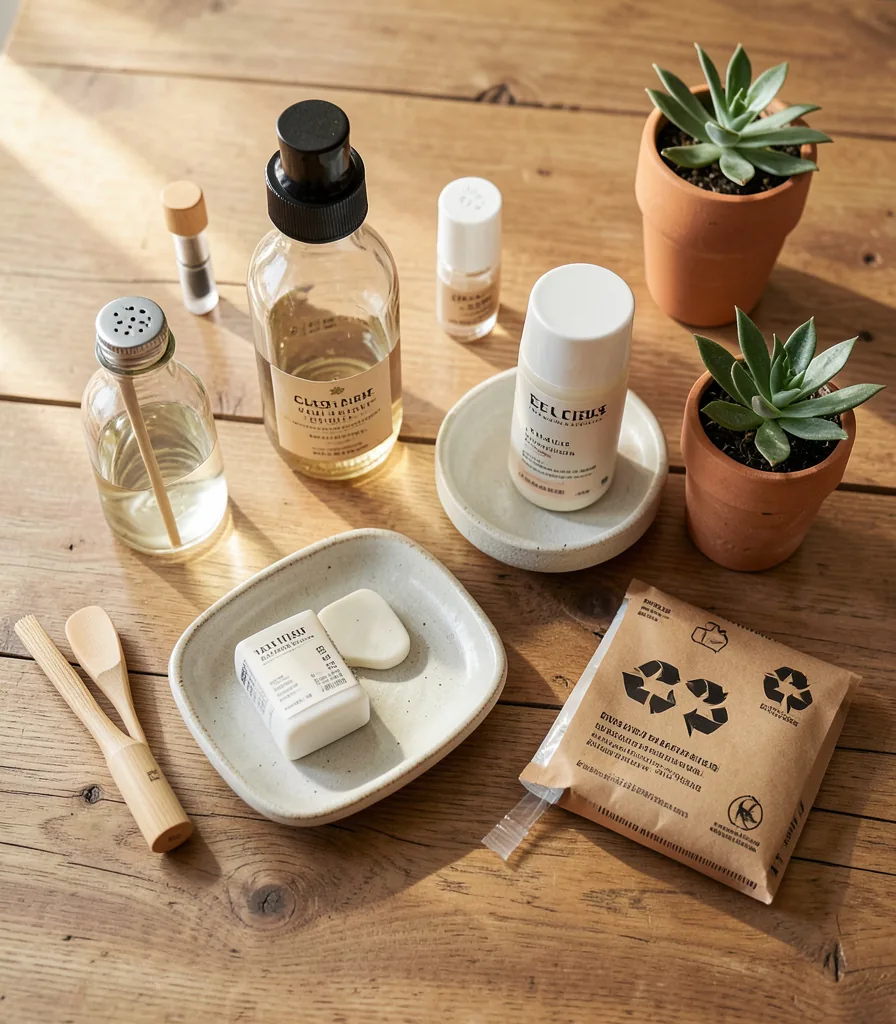
Minimalist zero-waste beauty routine with solid bars, glass refillable containers, and zero-plastic packaging on a natural wood surface

Brands Leading in Genuine Sustainability

These four brands represent different facets of sustainability leadership — none is perfect across all dimensions, but each has made verifiable commitments and demonstrable progress in their area of focus.

LUSH

Lush Cosmetics

UK, founded 1995, B Corp, manufacturing in-house

Lush's sustainability leadership is grounded in decades of consistent action rather than recent ESG positioning. Their "naked" (packaging-free) product range pioneered the concept commercially — over 40% of products are sold package-free globally. Fresh ingredients sourced directly from suppliers with published ethical buying policies. B Corp certified with a strong community score from employee ownership structure.

B Corp Leaping Bunny Naked Products Self-Preserving Formulas
ELATE

Elate Cosmetics

Canadian, B Corp, sustainable cosmetics pioneer

Elate is notable for tackling sustainability in the makeup category — historically one of the least sustainable beauty segments due to mixed-material packaging. Their bamboo compacts, refillable pans, and seed paper packaging represent genuine innovation. B Corp certified with particular strength in environmental impact scoring. A 2023 lifecycle assessment found their refillable compact system reduces packaging waste by 75% vs conventional makeup.

B Corp Refillable System Seed Paper Packaging Carbon Measured
ETH

Ethique

New Zealand, B Corp, waterless beauty specialists

Ethique was among the first brands to build an entire commercial product range around solid, waterless formulations. Founded in 2012, they have published lifecycle data showing their bars produce 80% less carbon emissions than conventional liquid equivalents when factoring in transport weight reduction. B Corp certified since 2016. They have prevented an estimated 50+ million plastic bottles from being produced via consumer adoption of their formats.

B Corp 100% Waterless Range Compostable Packaging Published LCA Data
F&M

Fat and the Moon

US, small-batch, wildcrafted + biodynamic sourcing

Fat and the Moon represents the artisanal end of the sustainability spectrum — small-batch production, wildcrafted and biodynamically-sourced ingredients where possible, and plastic-free packaging across the range. While not B Corp certified (scale prohibits it at current size), their published sourcing philosophy is specific: named farms, regional growers, and biodynamic cooperatives. A genuinely rare level of supply chain transparency for a brand of this size.

Named Suppliers Plastic-Free Biodynamic Sourcing Small Batch

Building a Lower-Impact Skincare Routine

You don't have to replace everything immediately. Strategic choices at key routine steps can dramatically reduce your personal beauty footprint without sacrificing efficacy.

1

Start with packaging reduction, not product swaps.

The most impactful change is reducing the number of products you use. A 5-step routine produces 2x the packaging waste of a 3-step routine with equivalent efficacy. Identify which steps add genuine skin benefit vs habitual use.

2

Switch your body wash to a solid bar first.

Body wash accounts for some of the highest volume plastic usage in beauty routines. A solid bar eliminates 100% of that packaging per replacement cycle. The climate case is clear and the performance barrier is low — solid bars clean skin as effectively as liquid formats for most skin types.

3

Buy concentrated formulas and dilute at home.

Some brands (Kjaer Weis, Votary) offer concentrated refills you dilute before use, or highly concentrated formulas that require smaller doses. This reduces transport weight, packaging volume, and cost per use simultaneously.

4

Participate in brand take-back schemes.

Lush, MAC (Back to MAC), Kiehl's, and Loop Industries operate take-back programmes for empty containers. These don't solve all packaging challenges, but they significantly improve actual recycling rates compared to consumer kerbside recycling, which rejects many cosmetic containers due to material complexity or residue.

5

Avoid frequent reformulation chasing — use products fully.

Influencer culture drives rapid routine changes that generate premature product waste. The most sustainable product is one you fully use before replacing. This alone — using products to the last drop — reduces beauty footprint meaningfully without changing any purchasing behaviour.