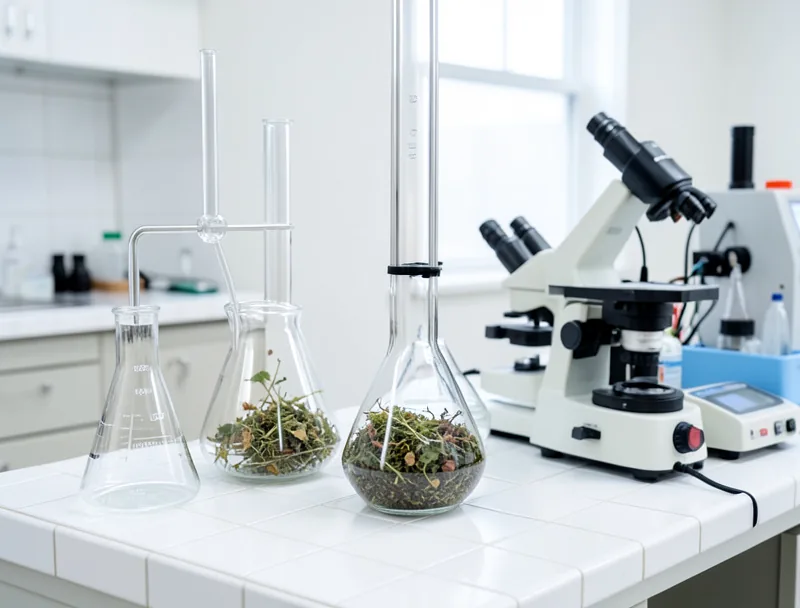
The Science of Skincare: Deciphering Formulations
Efficacy is not an accident. It is the result of precise molecular interactions, rigorous formulation stability, and a deep understanding of human physiology. Welcome to the intersection of chemistry and skin health.
Beyond the Marketing: The Chemistry of Care
In the contemporary beauty landscape, the term "clean" is often used as a marketing shield. However, at the laboratory bench, "clean" must translate to chemical stability, biological activity, and dermatological safety. As a cosmetic chemist, my work revolves around the molecular weight of actives, the polarity of emollients, and the intricate dance between aqueous and lipid phases.
The efficacy of any skincare product is fundamentally rooted in its ability to penetrate the stratum corneum—the skin's formidable outermost barrier—and deliver active compounds to their target sites without causing inflammation or oxidative stress.

Molecular Mechanisms of Key Actives
Antioxidant Networks
Vitamin C (L-Ascorbic Acid) is a potent electron donor. At a molecular level, it neutralizes Reactive Oxygen Species (ROS) by donating an electron to unstable free radicals. However, formulation is critical: L-Ascorbic Acid requires a pH below 3.5 to remain un-ionized and penetrate the skin.
- Neutralizes UV-induced damage
- Stimulates pro-collagen synthesis
- Requires Vitamin E for recycling
Signal Peptides
Peptides like Palmitoyl Pentapeptide-4 act as cellular messengers. When collagen breaks down, these small chains of amino acids signal the fibroblasts to produce more structural proteins. They are the "logic gates" of cellular repair.
- Mimics natural breakdown products
- Enhances dermal-epidermal junction
- Highly specific receptor binding
Retinoid Conversion
Retinoids work by binding to Retinoic Acid Receptors (RAR) in the cell nucleus. The efficacy depends on the "conversion steps" required: Retinol → Retinaldehyde → Retinoic Acid. Each step is enzymatic and dependent on the skin's biological state.
- Accelerates keratinocyte turnover
- Inhibits collagenase enzymes
- Potential for hormetic response
Interactive Formulation Simulator
Adjust the parameters to see how pH and concentration affect the Stability and Efficacy of common active ingredients.
Formulation Forecast
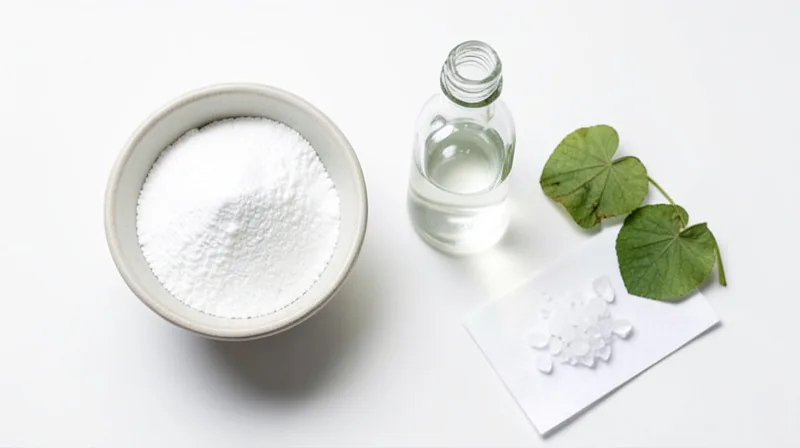
Bioavailability: The "Gatekeeper" of Results
Applying a serum is not equivalent to the skin absorbing its contents. Skincare formulation science is essentially the science of overcoming the barrier of the stratum corneum. To achieve high performance, we utilize several strategies:
Encapsulation Technologies
Liposomes and niosomes are spherical vesicles that mimic the skin's cell membranes, allowing fragile actives to bypass the barrier and release deeply into the epidermis.
pH Optimization
Controlling the hydrogen-ion concentration ensures that ingredients like AHAs remain in their non-dissociated form, which is necessary for penetration.
Solubilization Strategies
Using co-solvents and surfactants to ensure hydrophobic molecules (like oil-soluble vitamins) remain stable in aqueous bases.
Plant-Derived Actives: The New Gold Standard
Nature is the ultimate chemist. Phytochemicals offer multi-pathway benefits that synthetic molecules often lack. However, the challenge lies in the standardization of extracts to ensure consistent bioactivity.

EGCG (Green Tea)
Powerful polyphenol that modulates sebum production and provides radical protection.

Centella Asiatica
Contains madecassoside, a triterpene that accelerates wound healing and collagen type I synthesis.

Glabridin (Licorice)
A tyrosinase inhibitor that targets melanogenesis without the cytotoxic effects of hydroquinone.

Bakuchiol
The meroterpene alternative to retinol that induces similar gene expression without irritation.
The Skeleton of the Product: Understanding Excipients
While "active ingredients" get all the spotlight, they usually make up less than 5% of the bottle. The other 95% is composed of excipients that determine the texture, stability, and safety of the product.
Emulsifiers
Molecules with a hydrophilic (water-loving) head and a lipophilic (oil-loving) tail. They keep the oil and water mixed, creating a stable emulsion. Without them, your cream would separate into layers within minutes.
Humectants
Substances like Glycerin, Propanediol, and Hyaluronic Acid that attract water from the environment or deeper skin layers into the stratum corneum to maintain hydration.
Preservatives
Essential for preventing microbial growth. In clean beauty, we move away from parabens toward organic acids (Sodium Benzoate, Potassium Sorbate) and glycols that disrupt bacterial cell membranes.
Rheology Modifiers
Gums and polymers that control the "flow" of the product. They give a serum its silky glide or a cream its thick, luxurious body.
A Note on Chemical Stability
Ingredients interact. Some antioxidants can destabilize certain preservatives, and some emulsifiers can block the penetration of actives. Formulation is the art of balancing these chemical incompatibilities to create a harmonious final product.
Global Regulatory Compliance
Ensuring consumer safety through scientific validation and legal adherence.
European Union (EC No 1223/2009)
United States (FDA & MoCRA 2022)
China (NMPA & CSAR)
The Future of Formulation
We are entering the era of "Smart Cosmetics." As we look toward the late 2020s, the focus is shifting from generic solutions to biocompatible, data-driven systems.
Exosomes and Cell-Free Regeneration
Moving beyond stem cells, exosomes are the signaling vesicles themselves, offering a safer and more stable way to trigger tissue regeneration and collagen production.
Personalized Microbiome Support
DNA-based skincare is now reality. Formulations are being tailored to individual skin microbiome profiles to treat inflammatory conditions at their root.
Green Chemistry & Waterless Formulations
To minimize environmental impact, we are developing concentrated, anhydrous (water-free) products that reduce carbon footprint in shipping and eliminate the need for harsh preservatives.

Frequently Asked Science Questions
Why does Vitamin C serum sometimes change color?
This is due to oxidation. L-ascorbic acid is highly unstable. When it loses electrons to oxygen (from air or light), it converts into dehydroascorbic acid, which eventually breaks down into erythrulose—the same chemical used in self-tanners—turning the serum orange or brown. At this point, the antioxidant benefit is lost.
What is the difference between a Serum and a Moisturizer scientifically?
It comes down to viscosity and molecular concentration. Serums are designed as delivery vehicles with small molecules and high concentrations of actives to penetrate deeply. Moisturizers (creams/lotions) are designed to provide a barrier. They contain occlusives (waxes/oils) to trap water and humectants to hold it.
Can "Natural" products be as effective as "Synthetic" ones?
Yes, because the skin doesn't care about the origin of a molecule, only its structure. For example, a molecule of Vitamin C derived from a corn starch fermentation process is chemically identical to one synthesized from petroleum. The key is the purity and the formulation it's placed in.
Ready to Build Your Science-Based Routine?
Understanding the science is the first step. Applying it to your unique skin biology is the second.